STAC New York 2026 Spring
STAC has always been at the edge of Finance technology and a great place to keep on the pulse of whats happening. FMADIO had an Innovation Round up talk where we talked about our capture appliance and Push PCAP functionality.

FMADIO STAC NY 2026 Spring Innovation Round Up
Heres the quick summary of the slides
A packet in the modern networking infrastructure is effectively a Metadata header, include VLANs, MACs, IPs and Ports, followed by the actual packet payload, followed by a Metadata footer typically containing a timestamp, a TapAgg device ID and which port on the TapAgg the packet was received on.
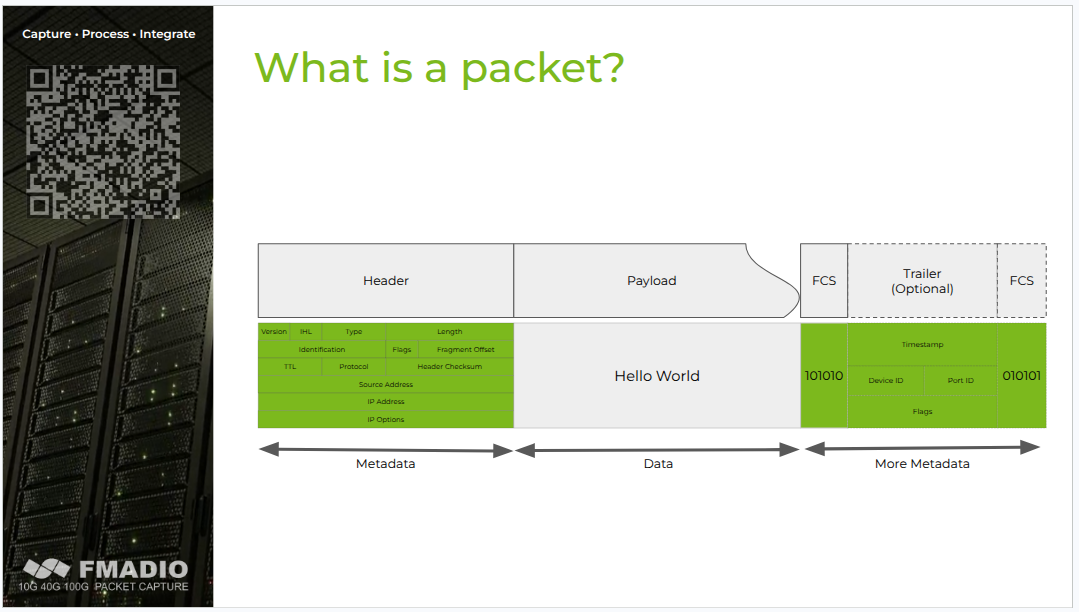
Anatomy of a Packet
So whats the problem? The challenge is when your tapping the same packet multiple times on the network, in this case 4 times it effectively quadruples (x4) the datarate of that packet on the egress.
For example if the actual packet data rate is running at 1Gbps, when tapping it x4 times for example
Before the FPGA
After the FPGA
Before the Exchange facing Switch
After the Exchange facing Switch
The outgoing TapAgg bandwidth is x4, e.g. 1Gbps becomes 4Gbps on the output.
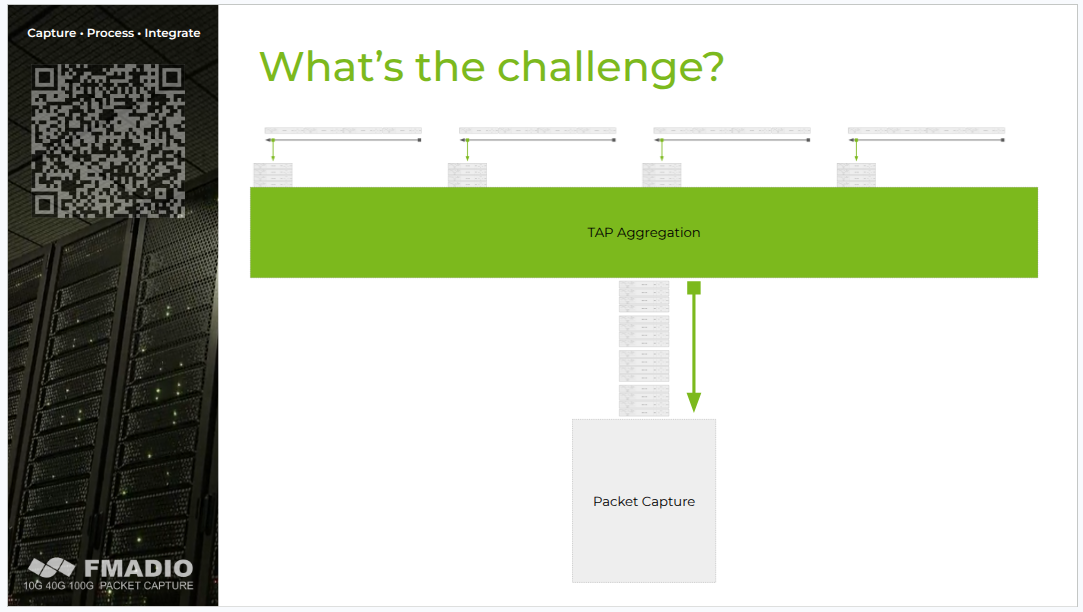
Multiple Tap points Amplify Egress bandwidth
Which results in significantly more pressure on the Capture device. It might only be micro bursting at these elevated rates, the capture system still needs to process line rate packets during the micro burst.
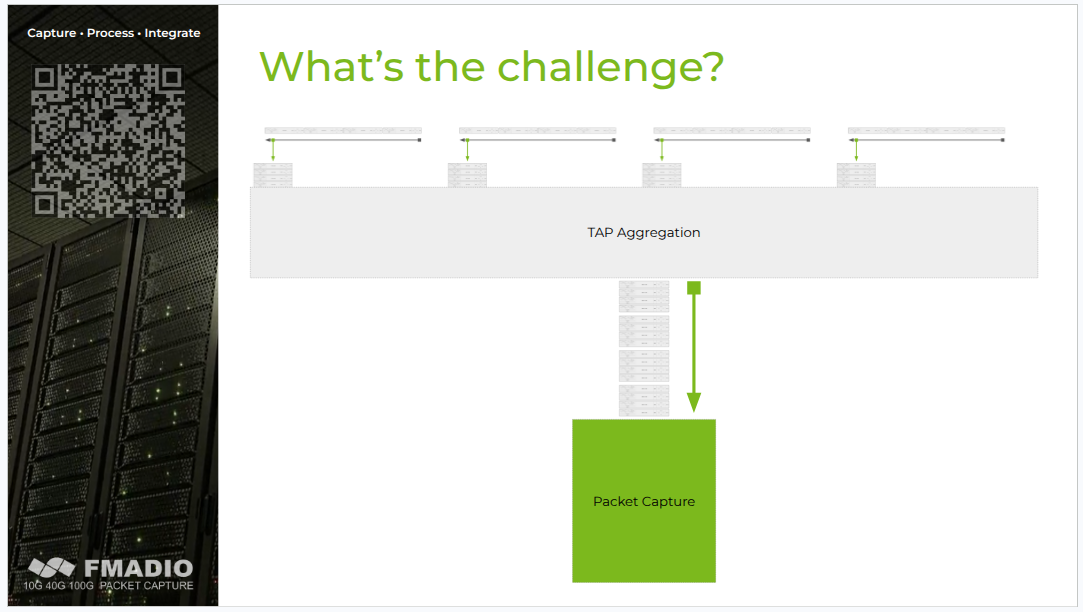
And on the capture device it receives the packets into a buffer, typically this is a few MB to a GB of RAM managed by the network card. Data cycles enters the ring buffer from the network card, and exist from the ring buffer and written to storage.
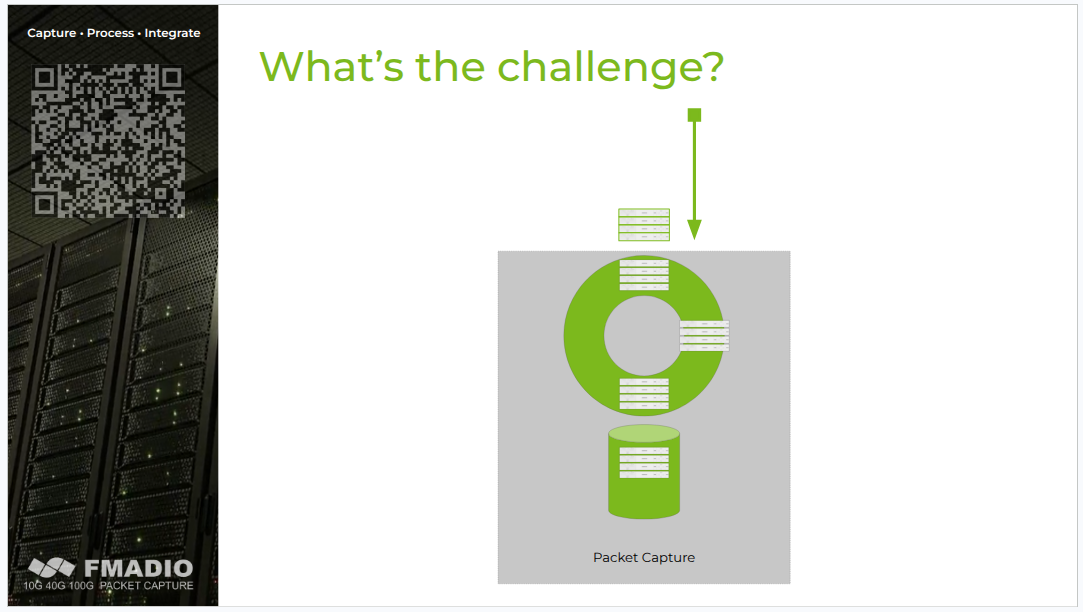
Capture Buffer in RAM by a Network Card
Which works well so long as the rate at which packets enter the buffer is the same or less than the rate it can be written to disk. When the incomming rate exceeds the rate at which it can be written to storage…. it results in a packet DROP, as shown below
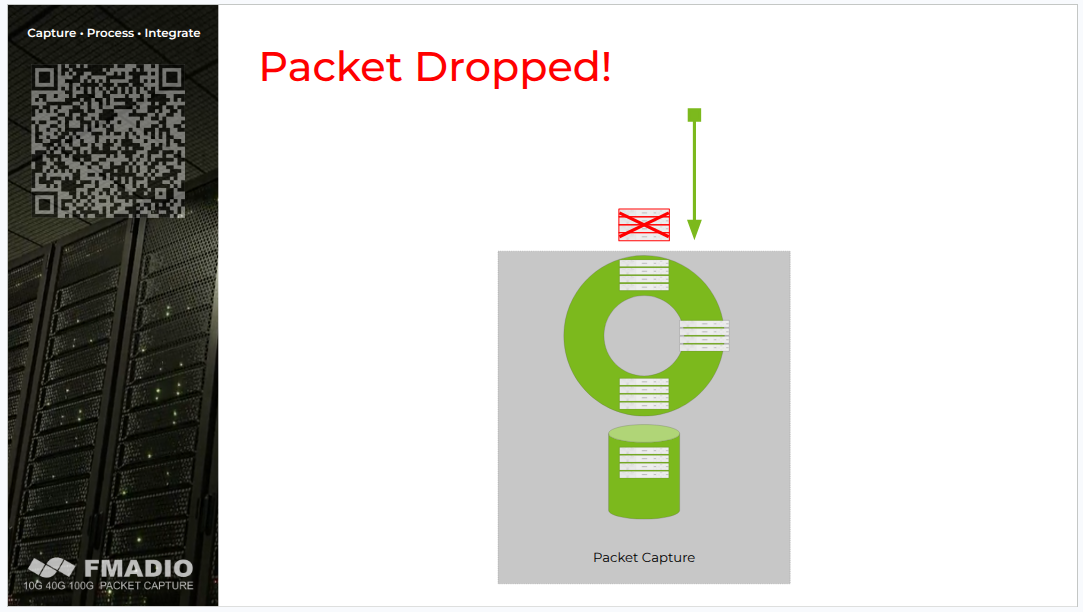
Packets are Dropped when the buffer fills up, because packets are received faster than it can write to storage.
Whats the solution? A bigger buffer of course!
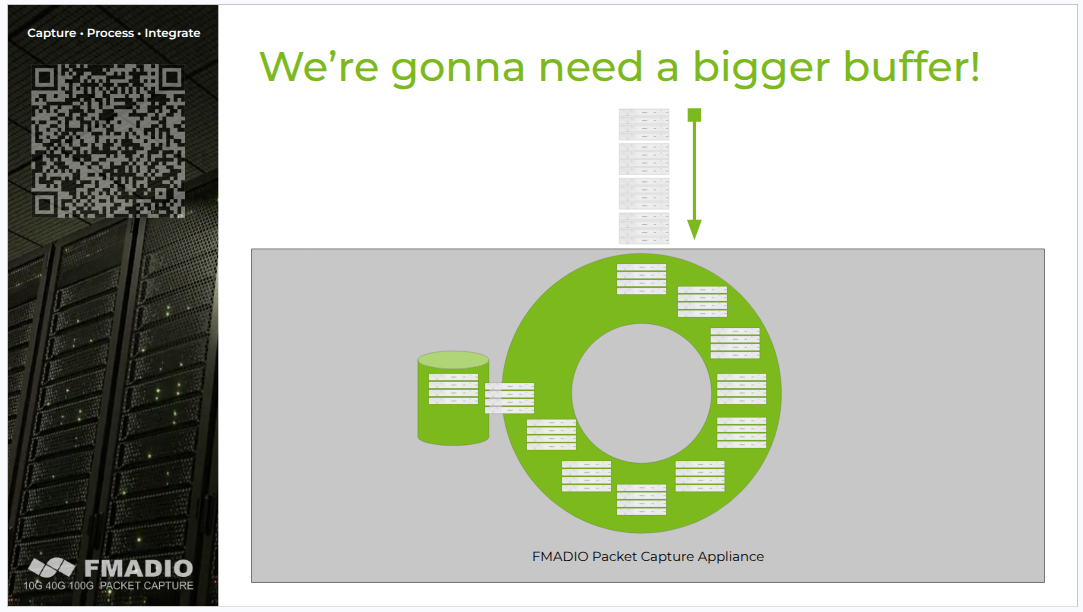
The fix, a bigger Buffer!
.. and FMADIO Our buffer goes up to 720TB and beyond!
Our secret sauce is this buffer is non-volatile Solid State Storage aka SSDs - not a small amount of volatile RAM.
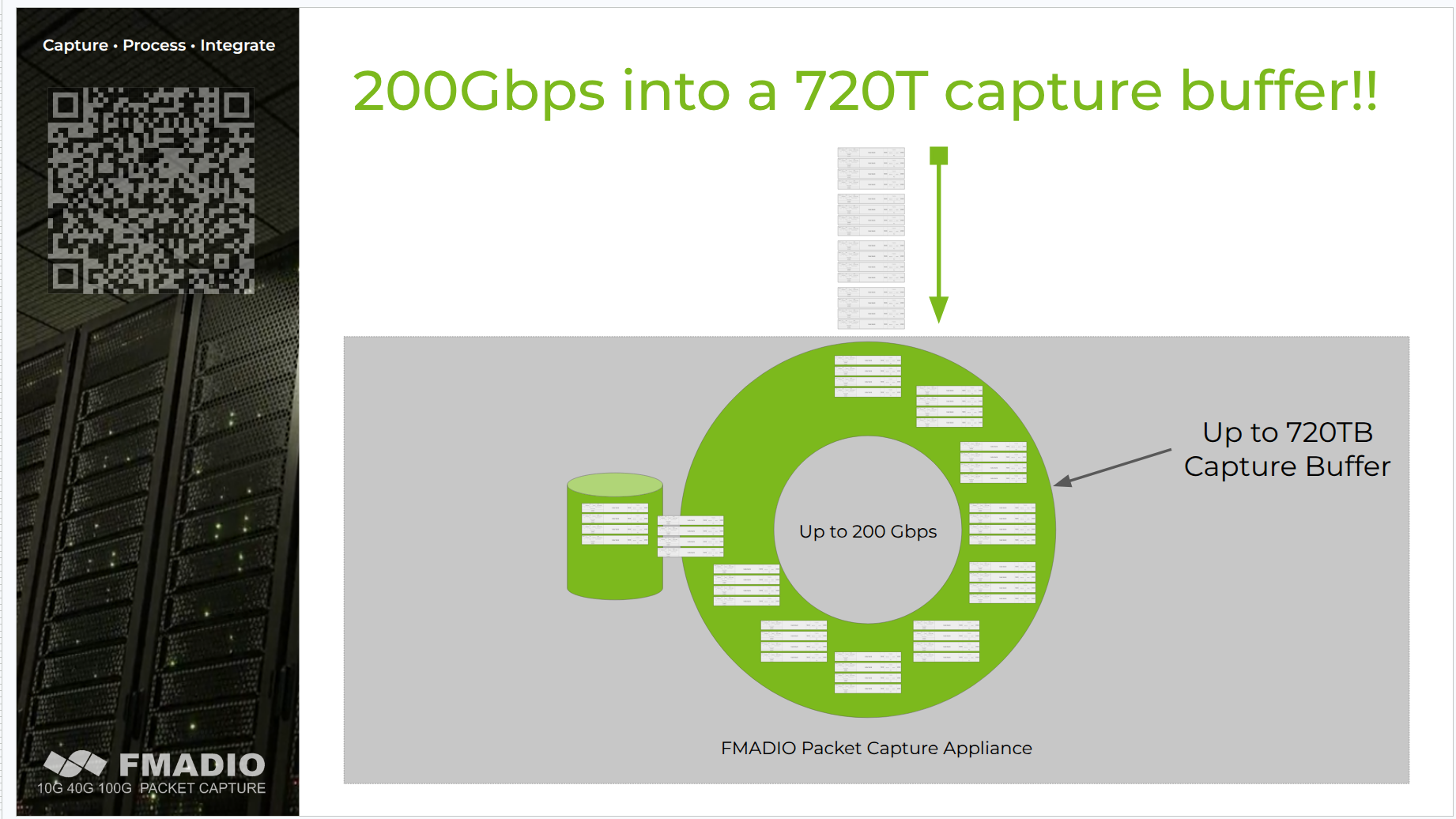
FMADIO Capture Buffer size is 720TB, yes T for Terabyte.
Which results in generating those PCAPs are no longer on the critical path. PCAP generation can be as fast or as slow as needed, within reason of course.
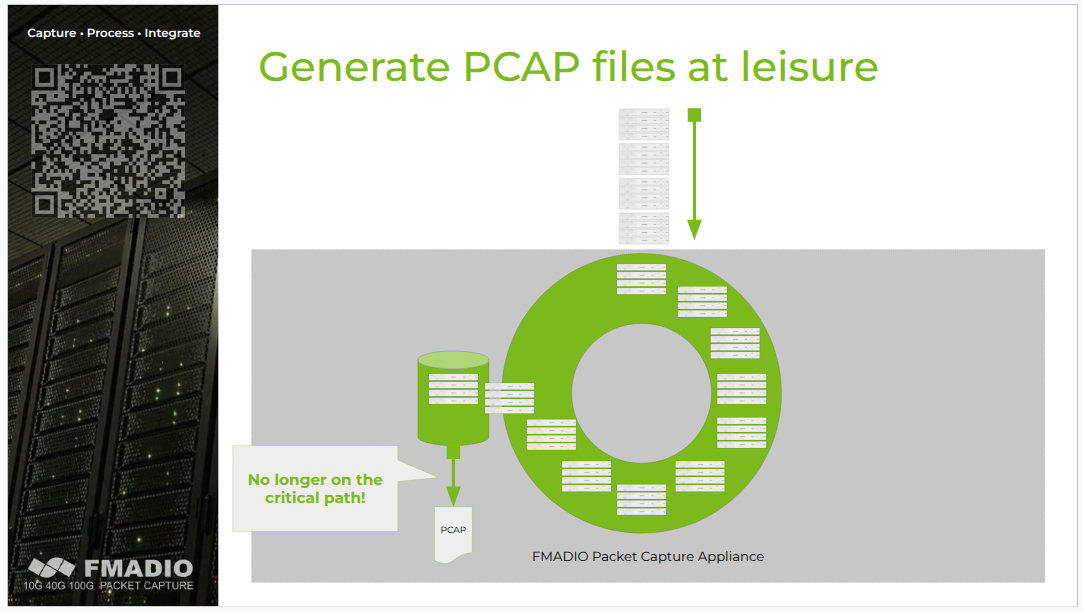
PCAP Generation not on the Critical Path
Which also means there is plenty of time to write those PCAPs to the Cloud, split by 1min, filtered by a BPF filter, compressed and processed. Because the Capture Buffer is so large generating loss less psuedo-realtime PCAPs only requires a simple configuration file.
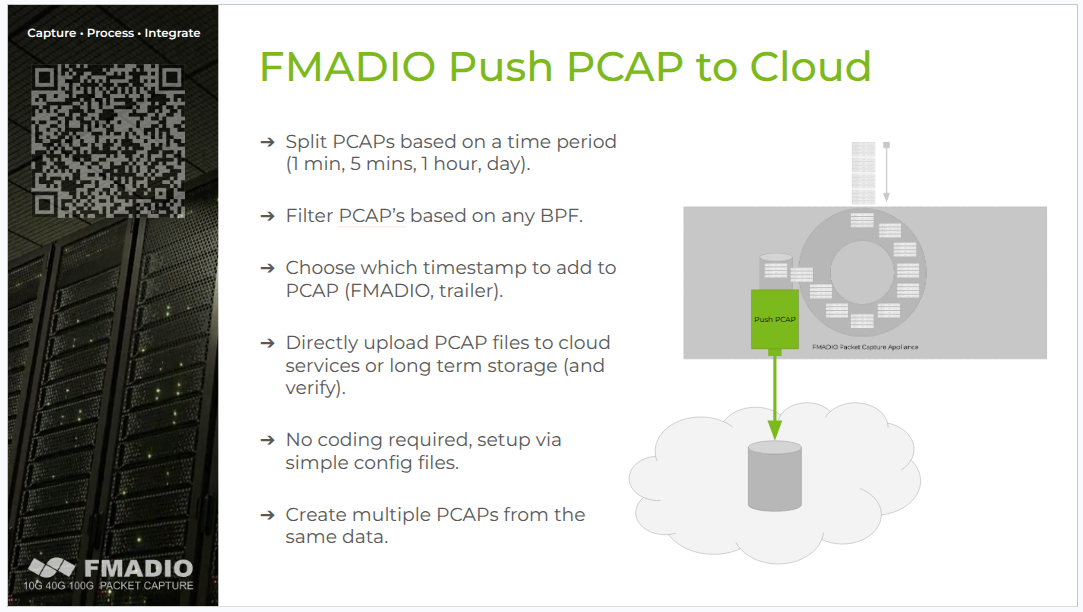
PCAPs in the Cloud
In short, at FMADIO we capture your data without loss, at up to 200Gbps sustained 297Mpps with ease and make that data easily available to your downstream systems.
We decouple the Packet Capture from the Packet Analysis, resulting in no packets left behind.
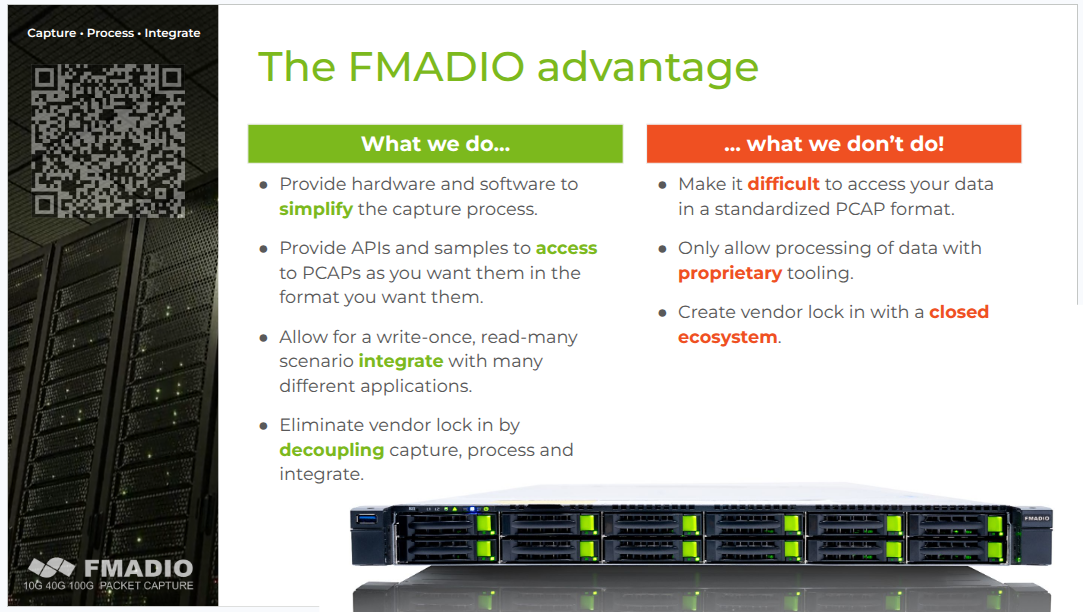
FMADIO Decouples Packet Capture from Packet Analysis
Contact us at support@fmad.io or in the contact form below for a deeper discussion around your Packet Capture and Analysis needs.